
Material hoist suppliers in sri lanka
Material hoist suppliers in Sri Lanka should review the load and the way goods reach each floor. Vortex Aventura helps warehouses, workshops and stores plan goods-only platform lifts around loading methods, available space and ongoing servicing.
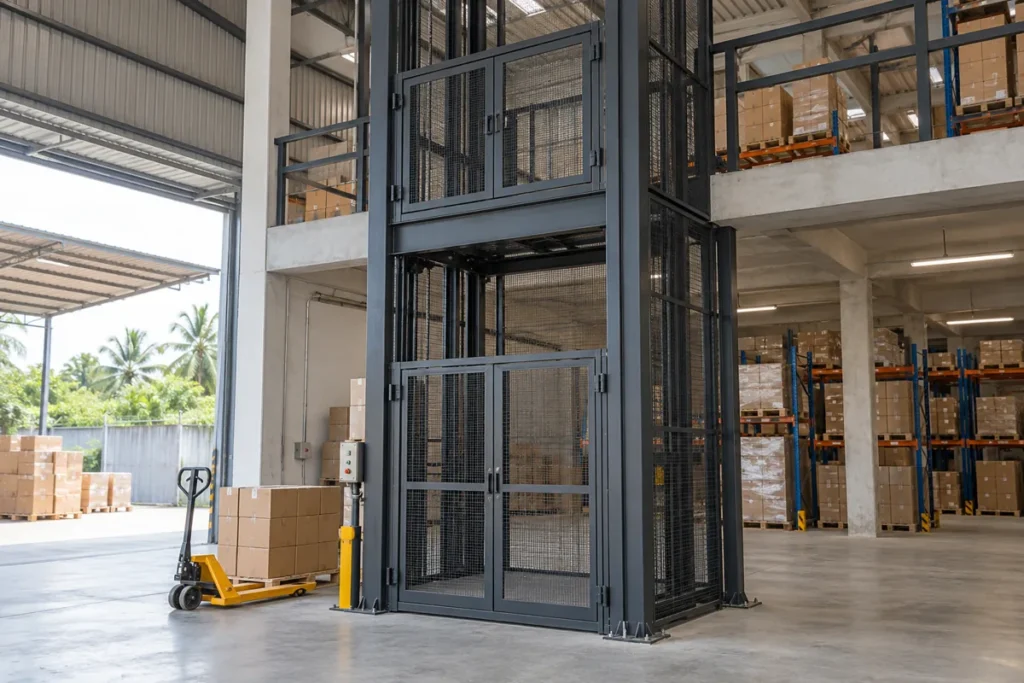
Representative warehouse lift arrangement.
Material hoists for everyday goods movement.
The right material lift starts with what you need to move and how it will be loaded. We review your requirements before proposing the platform, travel and landing arrangement.
Warehouses & stores
Move stock, cartons and stored materials between ground-floor receiving areas and upper storage levels.
Workshops & factories
Plan goods movement around production areas, parts storage and the dimensions of your materials.
Mezzanine storage
Assess floor access, loading space and the lift’s position within the building’s daily workflow.
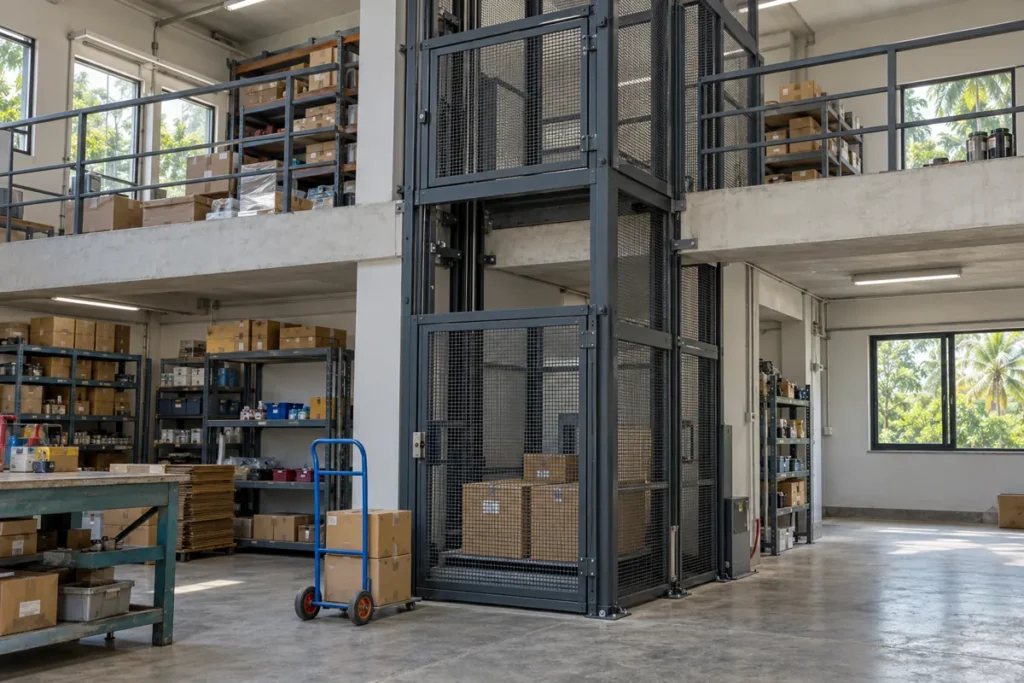
Plan the lift.
Plan the loading.
A practical layout considers the full route—from where goods arrive to how they leave the platform at the next level.
Load & platform
Share the heaviest load, its dimensions and whether it is handled by trolley or pallet jack.
Travel & access
Confirm the number of stops, floor-to-floor height, entry direction and clear space at each landing.
A clear scope before
you commit.
Send your site information and we’ll discuss a suitable next step. Your proposal should identify the equipment and site work included.
01 Share the requirement
Load weight and dimensions, daily use, number of floors and site location. Photos or drawings help us understand access.
02 Review the arrangement
Discuss platform size, loading sides, floor openings, enclosure, landing gates, controls and structural requirements.
03 Agree installation & support
Clarify site preparation, electrical work, installation, commissioning and the proposed maintenance arrangements.
Common material lift questions.
Material hoist suppliers in sri lanka: planning guide
Goods platform lifts
Goods platform lifts should match the dimensions and complete weight of the load. Include any trolley or handling device that enters the platform. Explain the transfer route at each level so the proposed entrances, platform and surrounding work area can be considered together.
Warehouse material lifts
A warehouse material lift needs to fit the way stock arrives, is stored and leaves each floor. Tell us about pallets, cartons, loading frequency and the available approach space. These details help define the working requirement before a particular arrangement is quoted.
Goods-only lifts and controlled access
The goods-only lifts covered here are not for carrying people. Discuss guarding, loading gates, controls and operating instructions for the selected equipment. Keep the intended use clear when comparing a material lift with a passenger elevator or an accompanied-goods installation.
Material lift installation
Material lift installation requires coordination with the supporting structure, loading openings, electrical supply and installation access. Ask for a written scope and current drawings before work proceeds. The proposal should explain the intended goods-handling arrangement and the responsibilities for building preparation and handover.
For general background, see the LEIA lift safety information sheets. The selected equipment, project specification and applicable local requirements must be reviewed for your building.
Practical questions before you decide
Start with the building or site location and describe who or what needs to move. For a material hoist, include the heaviest complete load, platform dimensions, travel height and the loading method. A drawing, a few current photographs and a short description of the task give our team a more useful starting point than a capacity figure alone. If the project is at an early stage, explain which details are still undecided so the initial discussion can identify the next measurements or decisions needed.
Explain the needs of warehouse, workshop and stores teams transferring goods between defined levels. We review cartons, pallets, trolleys or production materials and the frequency of goods transfers, because the proposed equipment needs to suit the way it will actually be used. Include any busy periods and any change you expect in the building or operation. The purpose is to develop an agreed working requirement before comparing models. The material lifts on this page are for goods only. They are different from a suspended chain hoist and must not be used to transport people.
Review loading openings, platform access, surrounding guarding, available headroom and the supporting structure. A clear space shown on a drawing may still have beams, services, access restrictions or other interfaces that affect installation. Share current measurements and identify any differences between the drawings and the building. Our proposal should be checked against the confirmed site arrangement before equipment details are finalised. The building’s qualified design team should review structural work and other responsibilities within its scope.
Ask for a written schedule covering the material lift, guarding and gates, installation, testing and operating instructions. Confirm the selected model or arrangement, the proposed operating requirements and the items excluded from the price. Where another contractor will carry out site work, identify that responsibility clearly. This makes quotations easier to compare on a consistent basis and helps avoid assumptions about what the equipment supplier will provide. Any allowances or provisional items should be resolved before the final order is confirmed.
Begin with an assessment of the actual space and the route by which equipment can reach it. Include loading openings, platform access, surrounding guarding, available headroom and the supporting structure, along with any restrictions on work hours or access through occupied areas. Existing finishes and services can affect the installation sequence. Feasibility depends on the selected arrangement and the building; a site-specific review is needed before promising that a particular model will fit or that structural alterations will be unnecessary.
Compare the same requirements rather than the total figures alone. For a material hoist, check that each quotation addresses the heaviest complete load, platform dimensions, travel height and the loading method and that the proposed use is equivalent. Then review the installation scope, stated exclusions, payment stages and handover requirements. An equipment-only price may leave substantial site responsibilities with the building team. Request clarification in writing when one proposal uses a different arrangement, so the decision reflects the complete project scope.
Request the proposed layout, equipment schedule and a clear list of site-preparation responsibilities. The documents should reflect the heaviest complete load, platform dimensions, travel height and the loading method and identify the information still needed from the building team. Discuss the intended sequence for delivery, installation, testing and commissioning. Ask which operating instructions, service information and handover records will be provided for the selected equipment. Keep the final agreed versions available to the people responsible for operating and maintaining the installation.
Explain the access route, unloading area and any restriction on moving equipment through the site. Discuss the work related to loading openings, platform access, surrounding guarding, available headroom and the supporting structure before fixing the installation sequence. Power supply, structural readiness, safe work access and the availability of the building team can affect coordination. Delivery and completion dates should be confirmed for the selected equipment and agreed scope; they should not be assumed from a general product enquiry or a reference image.
Installation puts the agreed equipment in place; testing and commissioning review the completed arrangement before normal operation begins. Ask how that process will be documented and which parties must attend. User handover should then explain the intended operation, the limitations of use and the process for reporting a fault. For a material hoist, operating instructions need to reflect cartons, pallets, trolleys or production materials and the frequency of goods transfers. The final equipment documents and applicable project requirements determine the detailed checks and responsibilities.
Discuss gates and interlocks, controls, loading procedures and a service plan matched to use when planning the installation, rather than leaving service arrangements until a fault occurs. Ask what routine visits cover, how additional repairs are authorised and how parts are identified and quoted. The appropriate maintenance arrangement depends on the equipment, its condition and its working pattern. Keep a record of reported problems and previous work, and make the manufacturer’s equipment information available to the service team for future assessments.
Read the actual warranty offered with the proposed equipment. Confirm its period, coverage, exclusions and any servicing obligations, along with the process for reporting a problem. Ask how replacement parts will be identified and whether any expected lead times need to be considered. A general website description does not define warranty terms or guarantee immediate parts availability. Those details should be documented in the quotation and supply agreement for the selected installation.
Our team reviews the intended use, identifies information still needed and discusses the appropriate next assessment step for a material hoist. A specific offer should identify the proposed arrangement, equipment details and installation responsibilities. If measurements or operating requirements change, tell us before the specification is confirmed so the proposal can be reviewed. Keep one current set of drawings and record accepted revisions; this helps the equipment supplier and building team work from the same requirements.
Let’s plan your material lift.
Tell us what you need to move and share your site details. Our team will help you work through the layout and next steps.