
Electric chain hoist
An electric chain hoist should match the load, lifting height and support arrangement. Vortex Aventura supplies TOYO-INTL fixed-hook and trolley-mounted electric hoists in Sri Lanka, with guidance on headroom, power supply and how the load needs to move.
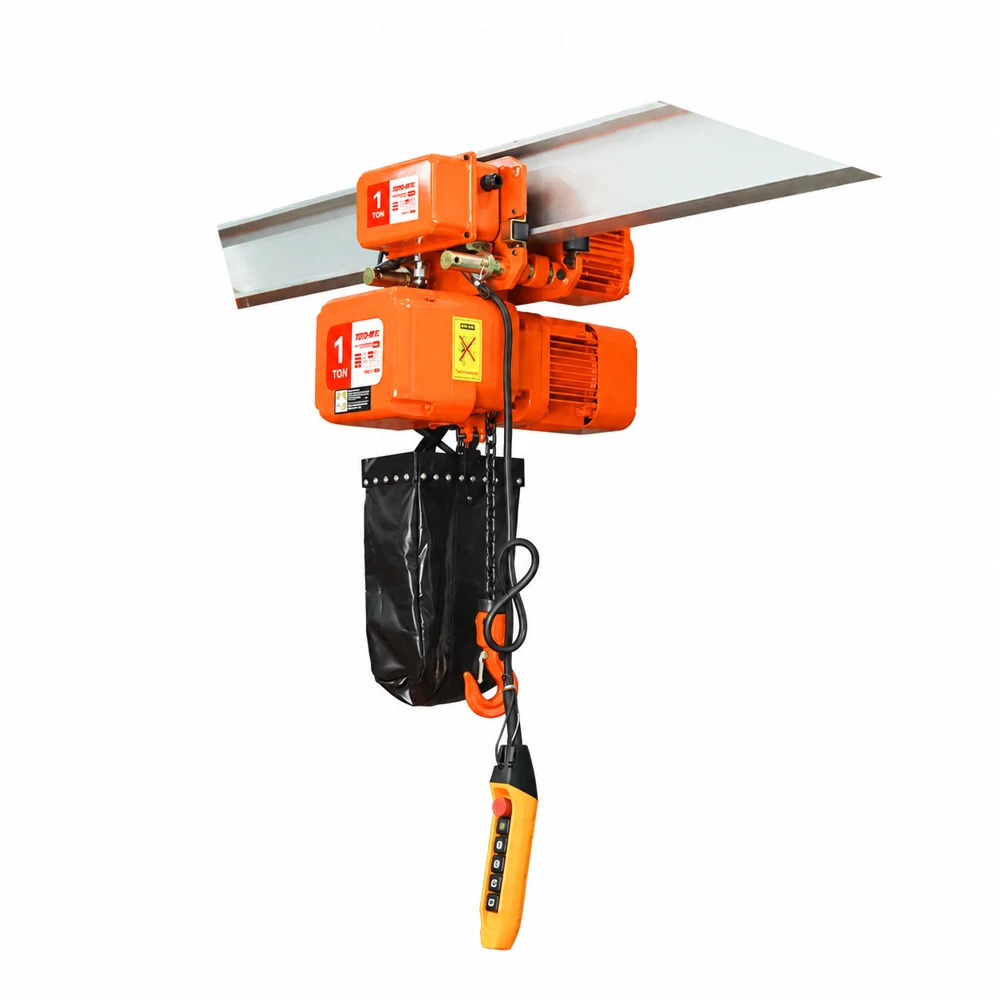
TOYO-INTL trolley-mounted electric chain hoist.
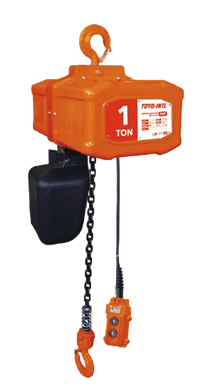
Fixed-hook electric chain hoist
Powered vertical lifting from a fixed suspension hook. A practical option when the load is handled at one working position.
We review the required capacity, lift height, suspension point and headroom to help you select a suitable configuration.
Trolley-mounted electric chain hoist
Powered lifting with travel along a suitable beam, helping move loads between working positions.
Share your beam dimensions, required travel, lifting height and electrical supply so we can review the hoist and trolley arrangement together.
Start with the load.
Then review the installation.
A hoist quotation needs more than a capacity number.
01 Load & lift height
Tell us the maximum load, required lift height and the dimensions or type of goods being handled.
02 Headroom & support
For a fixed-hook type, share the suspension-point details. For a trolley-mounted type, include the beam dimensions and travel distance. Tell us the available headroom for either arrangement.
03 Use & environment
Discuss operating frequency, electrical supply, location and any particular environmental conditions.
Questions before you decide.
Electric chain hoist: planning guide
Chain hoist suppliers in Sri Lanka
When comparing chain hoist suppliers in Sri Lanka, describe the task, maximum load and required lifting height. This page covers TOYO-INTL electric models with fixed-hook or trolley-mounted arrangements. Confirm the proposed model, controls and supply scope rather than comparing a capacity label alone.
Fixed-hook electric hoist
A fixed-hook electric hoist lifts from a defined suspension position. Share the support arrangement and available headroom, along with the required load and lifting height. The suspension and installation must be reviewed for the intended task; an existing overhead point should not be assumed suitable.
Trolley-mounted electric hoist
A trolley-mounted electric hoist adds travel along a suitable beam. Provide beam information, the travel distance and the operating route so the hoist and trolley can be reviewed together. Keep clearances and pendant access in the discussion alongside lifting capacity.
TOYO-INTL electric hoist enquiries
For a TOYO-INTL electric hoist enquiry, send the load, lifting height, site and power-supply information. Existing-equipment enquiries are more useful with a readable nameplate and photographs. The manufacturer’s TOYO-INTL website provides general product background; the quotation identifies the model and arrangement proposed for your task.
Practical questions before you decide
Start with the building or site location and describe who or what needs to move. For an electric chain hoist, include the maximum load, lifting height, available headroom and required horizontal movement. A drawing, a few current photographs and a short description of the task give our team a more useful starting point than a capacity figure alone. If the project is at an early stage, explain which details are still undecided so the initial discussion can identify the next measurements or decisions needed.
Explain the needs of workshop and warehouse teams carrying out planned lifting tasks. We review fixed-position lifting or lifting with trolley travel along a suitable beam, because the proposed equipment needs to suit the way it will actually be used. Include any busy periods and any change you expect in the building or operation. The purpose is to develop an agreed working requirement before comparing models. This range covers fixed-hook and trolley-mounted electric chain hoists only. A trolley-mounted unit combines lifting with beam travel; a fixed-hook unit lifts from one suspension position.
Review the suspension point or beam dimensions, clear lifting paths and pendant-control access. A clear space shown on a drawing may still have beams, services, access restrictions or other interfaces that affect installation. Share current measurements and identify any differences between the drawings and the building. Our proposal should be checked against the confirmed site arrangement before equipment details are finalised. The building’s qualified design team should review structural work and other responsibilities within its scope.
Ask for a written schedule covering the TOYO-INTL hoist, the specified suspension or trolley, controls and agreed installation responsibilities. Confirm the selected model or arrangement, the proposed operating requirements and the items excluded from the price. Where another contractor will carry out site work, identify that responsibility clearly. This makes quotations easier to compare on a consistent basis and helps avoid assumptions about what the equipment supplier will provide. Any allowances or provisional items should be resolved before the final order is confirmed.
Begin with an assessment of the actual space and the route by which equipment can reach it. Include the suspension point or beam dimensions, clear lifting paths and pendant-control access, along with any restrictions on work hours or access through occupied areas. Existing finishes and services can affect the installation sequence. Feasibility depends on the selected arrangement and the building; a site-specific review is needed before promising that a particular model will fit or that structural alterations will be unnecessary.
Compare the same requirements rather than the total figures alone. For an electric chain hoist, check that each quotation addresses the maximum load, lifting height, available headroom and required horizontal movement and that the proposed use is equivalent. Then review the installation scope, stated exclusions, payment stages and handover requirements. An equipment-only price may leave substantial site responsibilities with the building team. Request clarification in writing when one proposal uses a different arrangement, so the decision reflects the complete project scope.
Request the proposed layout, equipment schedule and a clear list of site-preparation responsibilities. The documents should reflect the maximum load, lifting height, available headroom and required horizontal movement and identify the information still needed from the building team. Discuss the intended sequence for delivery, installation, testing and commissioning. Ask which operating instructions, service information and handover records will be provided for the selected equipment. Keep the final agreed versions available to the people responsible for operating and maintaining the installation.
Explain the access route, unloading area and any restriction on moving equipment through the site. Discuss the work related to the suspension point or beam dimensions, clear lifting paths and pendant-control access before fixing the installation sequence. Power supply, structural readiness, safe work access and the availability of the building team can affect coordination. Delivery and completion dates should be confirmed for the selected equipment and agreed scope; they should not be assumed from a general product enquiry or a reference image.
Installation puts the agreed equipment in place; testing and commissioning review the completed arrangement before normal operation begins. Ask how that process will be documented and which parties must attend. User handover should then explain the intended operation, the limitations of use and the process for reporting a fault. For an electric chain hoist, operating instructions need to reflect fixed-position lifting or lifting with trolley travel along a suitable beam. The final equipment documents and applicable project requirements determine the detailed checks and responsibilities.
Discuss chain and hook condition, controls, suspension components and inspections appropriate to the equipment when planning the installation, rather than leaving service arrangements until a fault occurs. Ask what routine visits cover, how additional repairs are authorised and how parts are identified and quoted. The appropriate maintenance arrangement depends on the equipment, its condition and its working pattern. Keep a record of reported problems and previous work, and make the manufacturer’s equipment information available to the service team for future assessments.
Read the actual warranty offered with the proposed equipment. Confirm its period, coverage, exclusions and any servicing obligations, along with the process for reporting a problem. Ask how replacement parts will be identified and whether any expected lead times need to be considered. A general website description does not define warranty terms or guarantee immediate parts availability. Those details should be documented in the quotation and supply agreement for the selected installation.
Our team reviews the intended use, identifies information still needed and discusses the appropriate next assessment step for an electric chain hoist. A specific offer should identify the proposed arrangement, equipment details and installation responsibilities. If measurements or operating requirements change, tell us before the specification is confirmed so the proposal can be reviewed. Keep one current set of drawings and record accepted revisions; this helps the equipment supplier and building team work from the same requirements.
Let’s review your electric hoist requirement.
Send your load, lifting height, site location and preferred type. We’ll help you work through the suitable configuration and quotation details.
0777 123 141 / 0777 697 382